Understanding the earliest days of human microbial life, in the places that need it most.
Jennifer's doctoral and postgraduate research addressed some of the most consequential blind spots in modern biomedical science, generating data that challenges prevailing assumptions and has implications for how interventions are designed, tested, and scaled for the populations who need them most.
Jennifer's doctoral work addressed one of the most consequential blind spots in modern microbiome research: the near-complete absence of longitudinal data from urban low- and middle-income countries, where the burden of infant mortality is highest and the evidence most sparse.
The work integrates 55 participants and 927 maternal and infant samples from an observational cohort, alongside 305 participants and 2,079 samples from a clinical trial, collected across two study sites in Dhaka, Bangladesh. Jennifer led cross-institutional collaborations spanning Bangladesh, Canada, and the United States, and developed bioinformatics pipelines and statistical analyses using industry-standard computational tools.
How do birth, feeding, and environment shape the infant gut in the places most burdened by neonatal mortality?
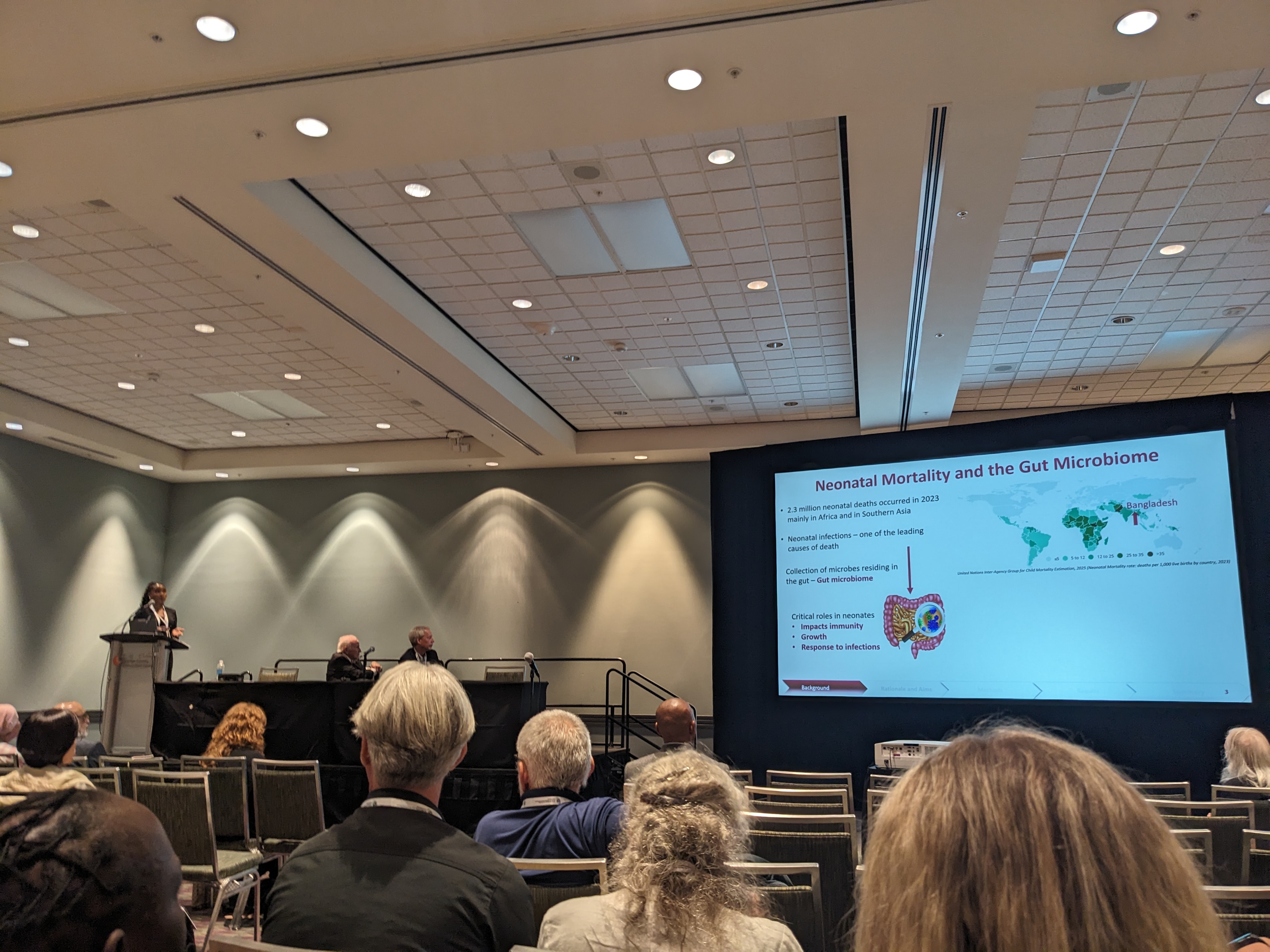
Drawing on 385 stool samples from 55 mother-infant pairs collected from birth to six months of life in Dhaka, Bangladesh, this study characterized the earliest developmental arc of the infant fecal microbiome using shotgun metagenomics. The microbiota was dominated by Bifidobacterium species alongside pathobionts including Klebsiella pneumoniae and Escherichia coli, a co-dominance that may signal early dysbiosis and contribute to elevated infection risk. Infant age and delivery mode emerged as the strongest predictors of microbiome composition and metabolic pathway abundance, while antibiotic exposure reshaped the microbial landscape most profoundly in the first month of life.
These findings illuminate a critical window: the first weeks of life represent a period of extraordinary vulnerability and plasticity, where targeted, context-specific interventions, including minimising unnecessary antibiotic use, supporting optimal feeding practices, and limiting harmful environmental exposures, may redirect the infant microbiome toward trajectories that protect rather than predispose. The study is expanding to include the infant oral and skin microbiome.
Manuscript in preparation · View PublicationsWhat actually shapes the infant microbiome, and does prevailing science reflect the populations who need it most?
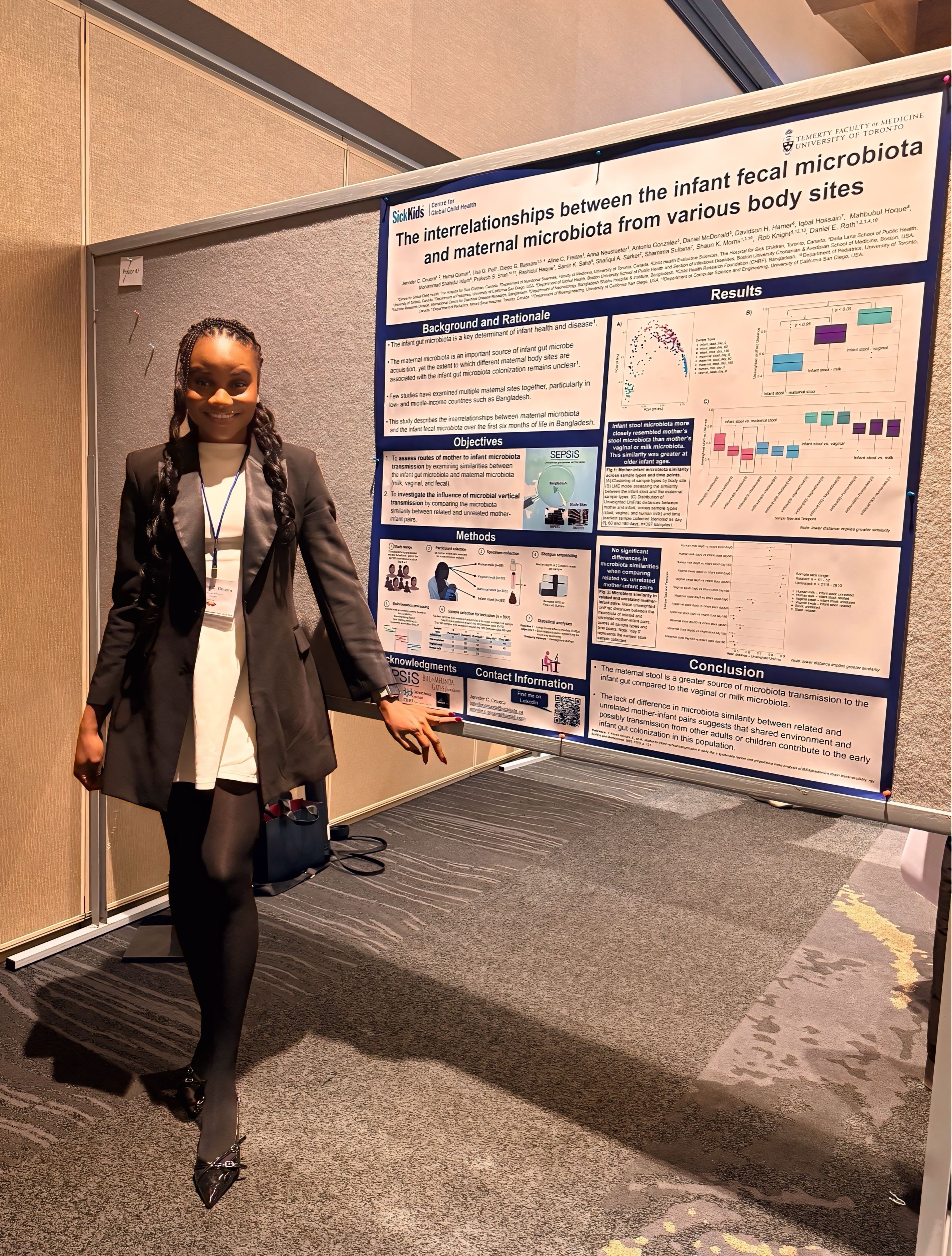
This study examined the microbial relationship between 55 mothers and their infants across multiple body sites, including maternal gut, vaginal, and skin microbiomes alongside infant fecal, oral, and skin microbiomes, analysed longitudinally from birth through six months. By mapping transmission patterns across this full constellation of maternal and infant body sites, the work produced one of the most comprehensive pictures of early microbial colonization generated from an urban low- and middle-income country setting.
The findings challenged a cornerstone assumption of microbiome science: that infant gut colonization is driven primarily by vertical maternal transmission. Shared environmental exposures and horizontal transmission proved equally powerful forces, a result that reframes how microbiome-targeted interventions should be designed and evaluated, particularly for the billions of people living in settings that Western-centred research has long overlooked.
Published in Cell Host and Microbe (2025) · doi:10.1016/j.chom.2025.11.002Can an intervention that reduced neonatal sepsis in rural India shift the infant gut microbiome in urban Bangladesh?
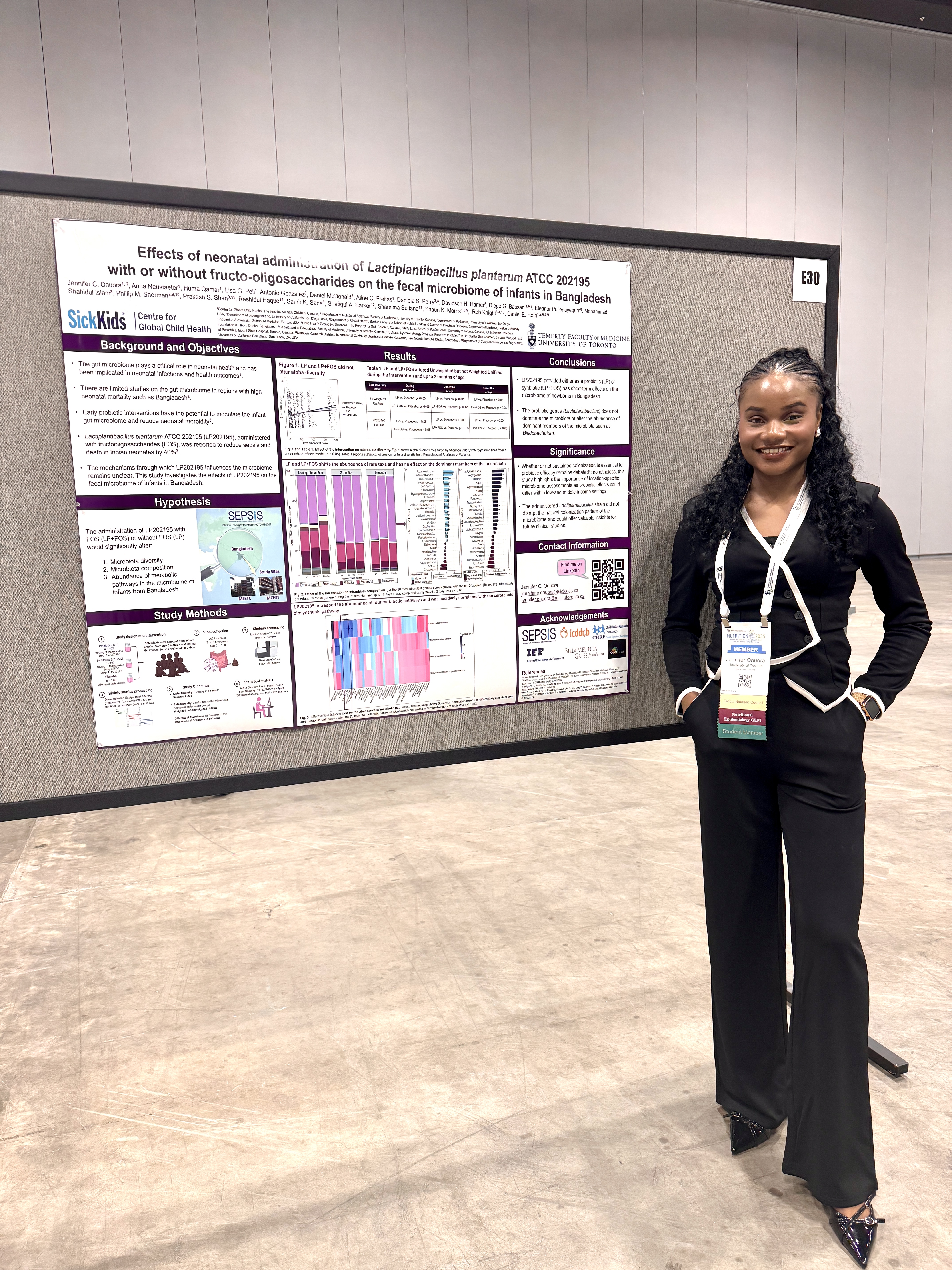
This three-arm randomised controlled trial investigated the effects of a seven-day course of Lactiplantibacillus plantarum ATCC 202195, administered as a probiotic alone or as a synbiotic with fructo-oligosaccharide, on the fecal microbiome and metabolome of 305 newborns in Dhaka, across 2,079 stool samples collected from birth to six months. The analysis spans both microbial community composition and downstream metabolic consequences, integrating metagenomics with metabolomics to capture the full biological footprint of the intervention.
The probiotic produced minor and short-lived effects on microbiome composition, with the indigenous Bifidobacterium longum-dominated microbiome resisting sustained colonization by the introduced strain. This is a significant scientific finding. It establishes that probiotic efficacy is not simply a property of the organism being administered, but is governed by the pre-existing ecological structure of the host microbiome. An intervention designed and validated in one geographical and biological context cannot be assumed to operate the same way in another. For a field in which global probiotic recommendations are routinely extrapolated from data generated in a narrow set of populations, this has far-reaching consequences for how neonatal interventions are designed, tested, and scaled.
Published abstract in Current Developments in Nutrition (2025) · doi:10.1016/j.cdnut.2025.106772 · Full manuscript including metabolomics in preparation · View PublicationsWhat if the way cells are grown in the laboratory shapes what we think treatments can do?
Supported by a Commonwealth Master's Scholarship awarded to fewer than 1% of international applicants globally, Jennifer's MSc research examined a critical problem in cystic fibrosis therapeutics. CF is a life-limiting genetic disease in which mutations in the CFTR gene disrupt ion and fluid transport across airway epithelia, causing viscous mucus accumulation, chronic infection, and progressive lung damage. Developing effective treatments depends on laboratory models that accurately reflect what happens in the human airway.
The gold standard model, primary human airway epithelial cells grown at an air-liquid interface, is now used across research groups worldwide to evaluate CFTR-directed therapies. But a growing number of differentiation protocols are in use, applied without standardisation and without a clear understanding of how profoundly they shape what the cells become. Jennifer's work demonstrated that the choice of growth medium fundamentally alters cellular architecture, gene expression, ion transport behaviour, and the response of CF cells to CFTR modulator therapies already in clinical use.
The implication is significant: two research groups studying the same drug, using the same cell type, may reach different conclusions simply because of how their cells were grown. Establishing what a model is doing before asking what a treatment can do is not a technical detail. It is a scientific necessity.
Published in Cells (2020) · doi:10.3390/cells9092137